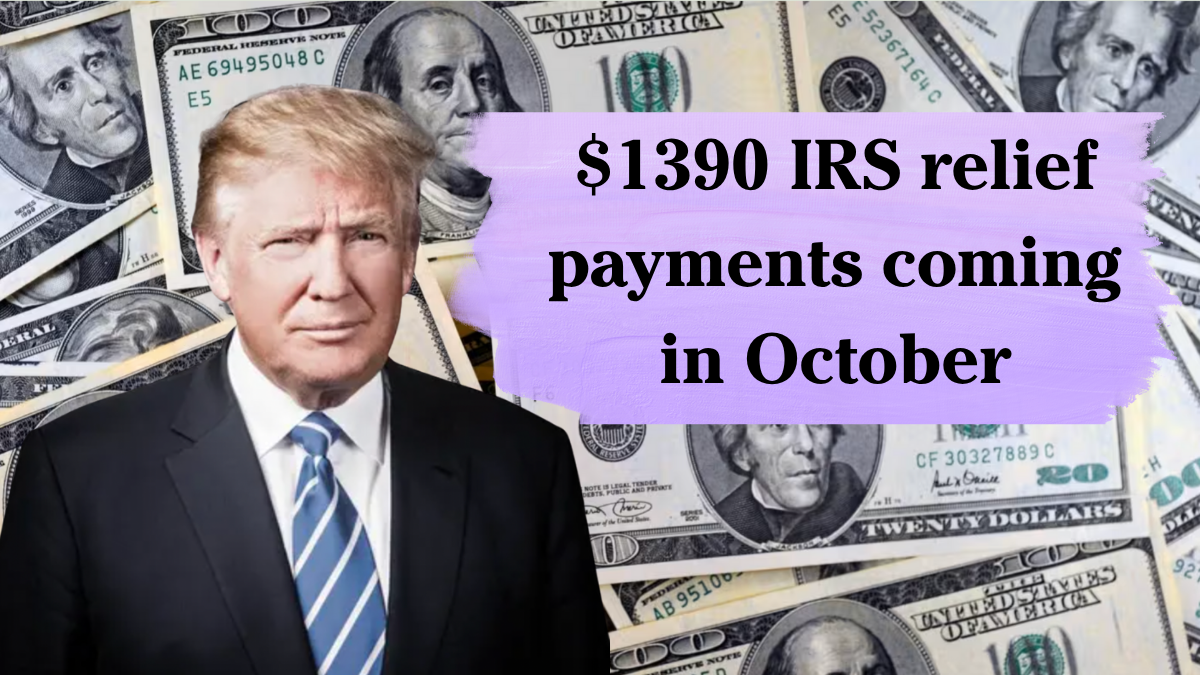
In recent months, a widespread viral claim has been circulating that the IRS will issue new relief payments of $1,390 to eligible U.S. taxpayers — often described as a “fourth stimulus check” or “October rebate.” The amounts vary in different posts (some mention $1,390, $1,400, $2,000), but $1,390 has been a frequently cited figure.
The claim typically states that low- or middle-income individuals (for example single filers under $75,000, married couples under $150,000) will receive an automatic direct deposit or paper check. Some posts assert the payments will arrive in October or November 2025.
What the Facts Say
✓ No legislation authorised the payment
Any federal stimulus check or economic-impact payment must be authorised by Congress via legislation and signed into law.
As of now, no bill has passed that authorises $1,390 (or similar) checks for 2025.
✓ IRS and Treasury: No new program announced
The IRS has publicly stated that no new stimulus checks are scheduled for release this year.
For example, a fact-check article reports: “The IRS says there are no new stimulus checks on the way…”
✓ Rumors trace back to older relief programs
The origins of the $1,390 (or similar) figure appear linked to the previous era of stimulus payments (during COVID-19) — such as the Recovery Rebate Credit, which allowed up to $1,400 for some taxpayers.
But those past payments are not representative of a new, current program.
✓ Many posts flagged as misinformation or scam risk
Because no official payment is authorised, many fact-checkers warn that posts promising an imminent $1,390 check could be clickbait or part of scam-campaigns.
Why the Rumour Persists
- Hope & expectation: After multiple stimulus rounds during the pandemic, many Americans expect similar relief when cost-of-living remains high and government messaging about “helping families” persists.
- Click-bait & viral content: Headlines claiming “You’ll get $1,390” attract attention; once shared widely they gain momentum even without verification.
- State-level payments confuse audiences: Some states are issuing rebates or relief programs (e.g., up to $400 inflation relief in New York) which may be mis-interpreted as federal checks. Hindustan Times
- Proposals vs. law: There are proposals (for example the American Worker Rebate Act) to issue rebates, but they are not law and thus not actionable yet.
What This Means for Taxpayers
✅ Do not base financial planning on the $1,390 check
Since the payment is not authorised, you should not rely on it. Avoid making major budget decisions (e.g., big purchases) anticipating the check.
✅ Stay updated via official channels
Check IRS.gov or the U.S. Treasury website for confirmed announcements. If you don’t see a formal statement, the claim is likely unfounded.
✅ Be alert to scams
Because of these rumours, scam-actors may contact individuals claiming “you qualify for $1,390 direct deposit” and ask for bank info, ID numbers, or upfront “processing fees.” The IRS will not initiate such contact.
Red flags: unsolicited texts/emails, links to “verify eligibility”, requests for payment to receive funds.
✅ Remember: state vs. federal
Some relief payments may come from state programmes (rebates, tax refunds, inflation credits) rather than federal stimulus checks. These vary by state and should not be confused with a nationwide federal payment.
✅ Know your existing credits
You may still qualify for other tax credits (e.g., child tax credit, earned income tax credit) or refunds for previously unclaimed payments (Recovery Rebate Credit) — but these don’t equate to a new $1,390 check program.
Bottom Line
The viral claims that the IRS is issuing a $1,390 stimulus check for taxpayers in 2025 are false at present. No legislation authorises it, no official announcement confirms it, and the IRS says no such program is underway.
While financial relief is always a possibility in future, such payments must be lawfully authorised, publicly announced, and administered through proper channels. Until then: treat the $1,390 check rumours with skepticism, protect your personal information, and rely on verified government sources.